01
The pitch
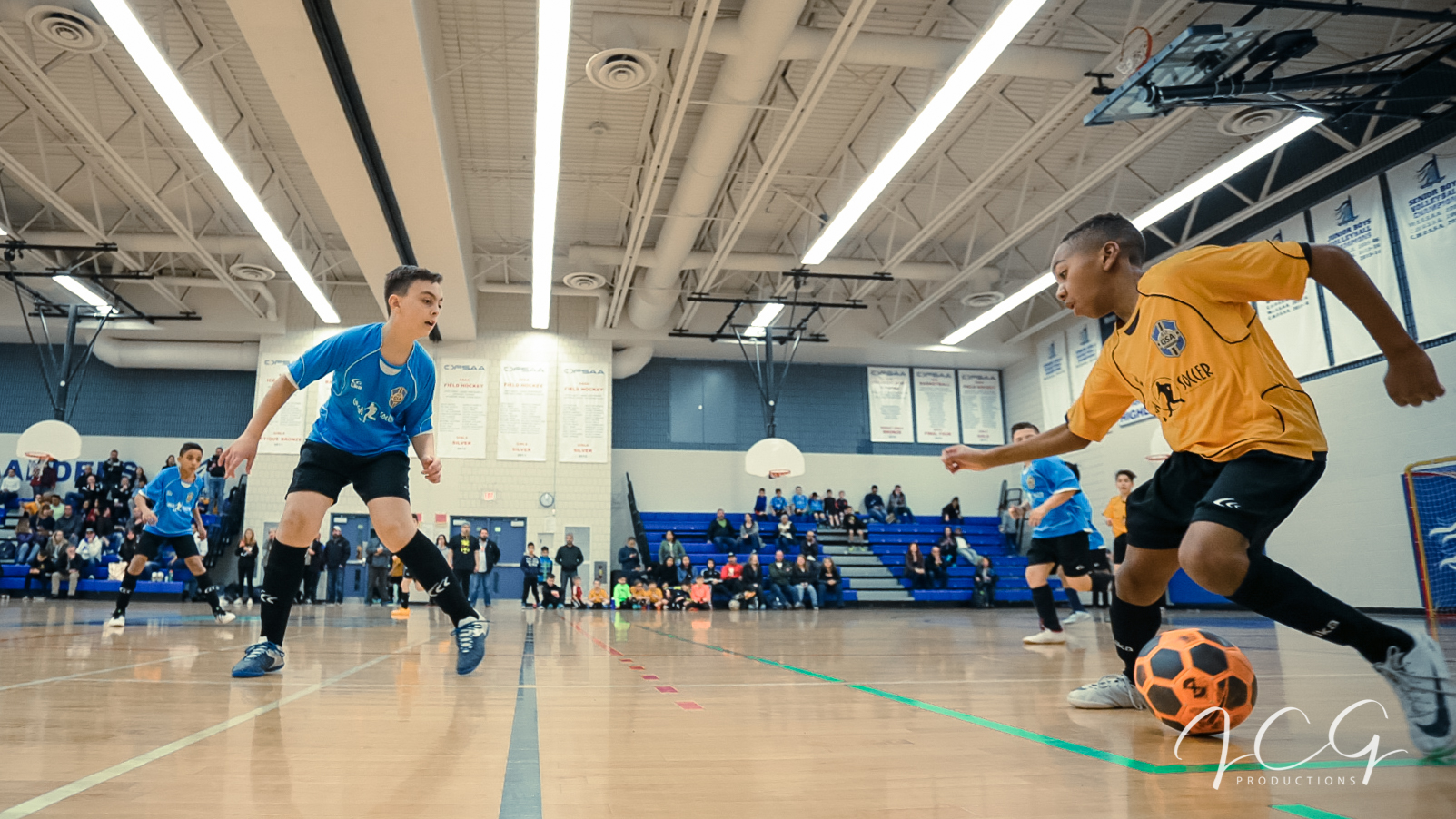
Futsal is played on a marked hard court with 3 m × 2 m goals. An international-size court is generally 20 m × 40 m, creating a fast, close game.
The WCFC guide
Five-a-side football built for speed, skill and smart decisions. The smaller court puts every player in the action and makes every touch matter.
Know the game
Futsal has its own ball, court markings and restart rules. Here are the essentials players and families will see on match day.
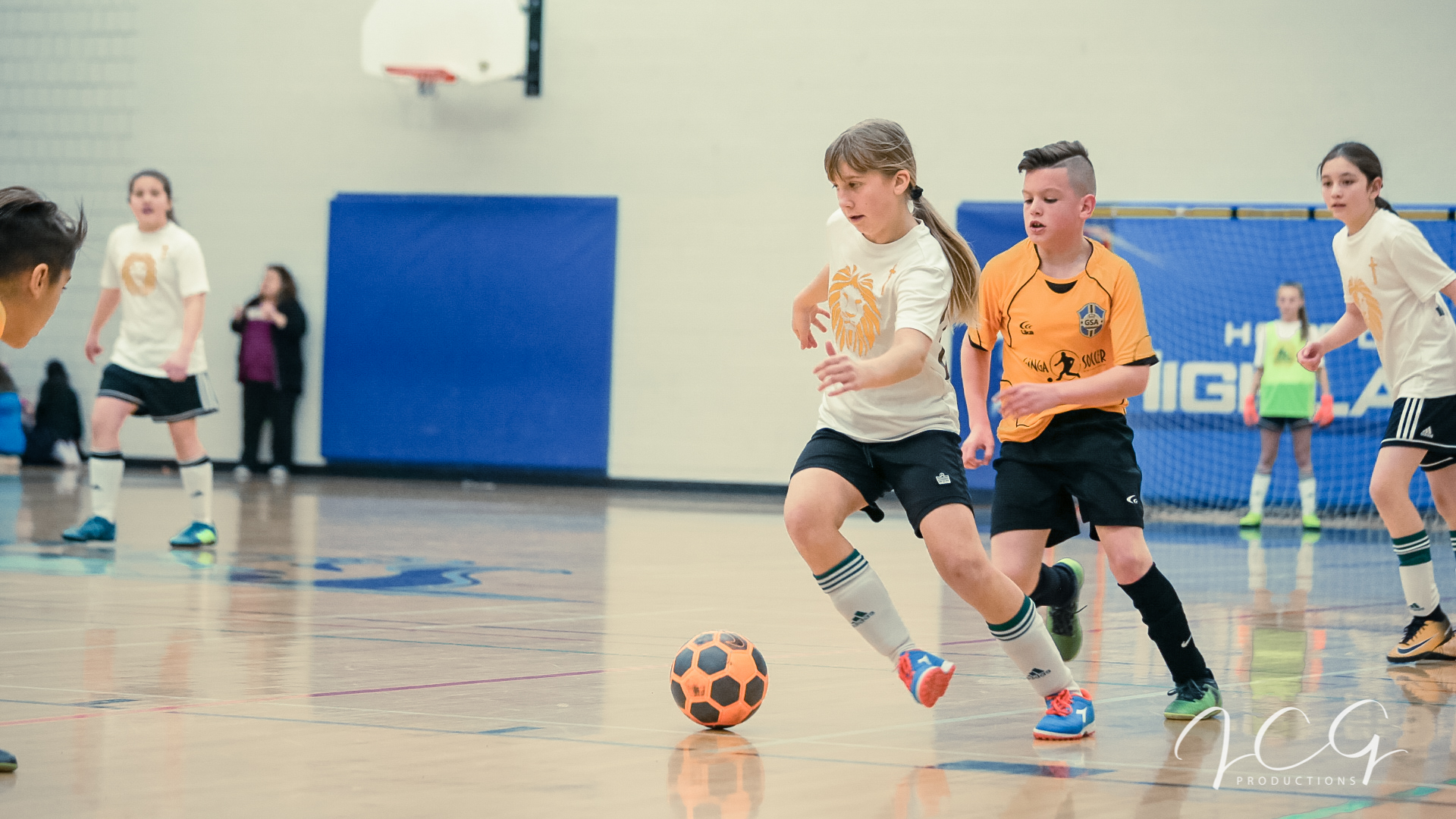
Futsal is played on a marked hard court with 3 m × 2 m goals. An international-size court is generally 20 m × 40 m, creating a fast, close game.
The futsal ball is smaller and has a reduced bounce. It stays close to the floor and rewards clean control, quick passing and accurate technique.
Teams can make rolling substitutions through the marked substitution area. Players may leave and re-enter, keeping the pace high from start to finish.
When the ball crosses the touchline, play restarts with a kick-in rather than a throw-in. The ball must be still and correctly placed before play resumes.
Kick-ins, corners, free kicks and goalkeeper restarts must be taken promptly. The referee counts four seconds once the player is ready to restart.
Opponents must allow five metres at free kicks, corners, kick-ins and penalties, giving the player in possession room to restart safely.
Goalkeepers can move throughout their penalty area and may join the attack. Goal clearances are thrown, and special possession rules keep the game moving.
Direct free-kick fouls are counted in each half. After the fifth, later fouls can lead to a direct attempt without a defensive wall.
The FIFA format uses two 20-minute halves with the clock stopped when the ball is out of play. Each team may request one 60-second timeout per half.
A slide is not automatically a foul, but careless, reckless or excessive contact is. Serious offences may bring a red card and a temporary two-player-minute penalty.
Futsal is managed by two on-court referees, supported in full international matches by a third official and a timekeeper.
This is a quick introduction. Competition rules may vary by age group and venue. See the official FIFA futsal documents and PLF competition rules for full details.
Player development
The game develops football intelligence through constant, realistic decisions.
Small teams and a compact court keep every player involved.
Limited space builds close control and confidence under pressure.
Four-second restarts teach players to scan, choose and act quickly.
Constant transitions reward support runs and intelligent positioning.
Short passing and give-and-go play develop teamwork and awareness.
The low-bounce ball encourages accurate passing, receiving and striking.
Players repeatedly practise creating chances and finishing near goal.
Everyone must press, recover, track runners and protect space.
Few stoppages and rolling substitutions keep players active.
Fast, competitive games give every player meaningful moments on the ball.
Ready to play?